Featured Essays

Sunday, July 3, 2011

What Is Google+? Introducing the New Evolution of Social Media


Big changes are coming to Google.

You may have noticed the many drastic changes to the Google interface over the past several weeks. First, there was the big striking black navigation bar on top of the screen. Then, the left sidebar menu changed its font, colour, size and iconography. This is followed by the integration of the "+1" button next to your search results, not to be mistaken with its evil counterpart: the "Block all results from this website" button. They even removed the popular RealTime Google search function, which previously retrieved live-time tweets from Twitter users. All these changes finally came together on June 28th 2011, when Google announced its launch of the Google+ platform.

What is Google+? The latest innovation from Google has been classified under many descriptions. It is most commonly hailed as the "new rival of Facebook" due to the prominent social media integration within the Google+ platform, where users can submit live-time news and share online content within their social communities. You are able to categorize online users into different communities, such as friends, family, business acquaintances, and other like-minded individuals, and communicate different kinds of information through these compartmentalized channels. Google+ places a heavy focus on creating, communicating, and sharing social content with online users – but not just with any ordinary Joe on the Internet; instead, Google connects you to a specialized community of users that has the same likes, interests, and online surfing habits as you do. In other words, imagine Google+ as a more intimate and customized level of social media.

With the launch of Google+, the biggest search engine in the world is about to get even bigger. This article will continue to explore the many changes that you can expect from this massive Google update, and how it might affect your online browsing experience.

Monday, June 20, 2011

All About Adele - A Review of Adele's Music, Career and Life

All About Adele - A Review of Adele's Music, Career and Life

Her name is Adele.

If you turned on the radio at any time in the past several months, you probably have heard of this musical prodigy, who is currently dominating the radio airwaves, the Billboard charts, and the music industry as a whole.  The English singer-songwriter debuted a few years ago and instantly reached critical acclaim for demonstrating a masterful control over her raw, passionate, and powerful voice.  Her previous work "Chasing Pavements" became a cult favourite, but it was her recent hit single "Rolling in the Deep" that has sold over 2.5 million digital copies and climbing.  In addition, her sophomore album "21" recently reached 1 million in sales figures – the first of all albums to do so in the year 2011.  As the numbers indicate, Adele is clearly one of the breakout musical stars in recent times.

Nowadays, there are far too many young successful breakout stars emerging within our popular culture.  This is not surprising given the Youtube age, which brought us controversial teenage sensations like Justin Bieber and Rebecca Black, both of whom have questionable levels in talent at best.  Amidst these singers who are more famous for their celebrity status than their actual voices, Adele introduces a refreshing breath of fresh air for those who have lost hope in the young singers of our age and time.  She is one of the few rare exceptions whose growing popularity matches her immense talent.  Both her debut and sophomore albums, "19" and "21" (titled aptly to reflect her age at that specific point in life), received nearly unanimous positive reviews from professional critics and casual fans alike.  This is a feat accomplished by very few artists, let alone somebody at her young delicate age.

This article will cover Adele's life journey thus far, from her humble beginnings at a single-parent London home to her current international breakout success.  Her musical legacy has already marked at the young age of 22, and she shows no signs of stopping any time soon.  If there are any artists who can rejuvenate the music industry unlike any others before her, Adele has to be the one.  She truly is one-of-a-kind.

Tuesday, May 3, 2011

Canada Election 2011 Trends – Still Stephen Harper, Eh?

Canada Election 2011 Trends – Still Stephen Harper, Eh?

Good morning Canada, and welcome to a Conservative majority government!

This blog usually focuses on analyzing American pop culture trends, but I am just a big ole Canadian at heart and these political elections are always so fun to discuss afterwards.  Of course, the 2011 election probably seems irrelevant and meaningless to any foreigners outside of Canada, especially since there aren't a lot of significant changes on the surface.  Stephen Harper is still our reigning prime minister just like the past five years.  The one small but notable difference is that the Conservative party now holds a majority government, which means they have more power and influence over the hot button federal issues in our country.

For those who aren't familiar with Canadian politics, here's a quick run-down of the political system: Canada is divided into 308 electoral districts based on approximate population density.  Each district is represented by a Member of Parliament (MP) who must win their seat against other political parties in a popular vote.  A majority government is achieved if at least 155 out of the 308 seats are represented by one predominant party; otherwise, the country holds a minority government instead.  Yesterday, as of May 2nd 2011, the Conservative party took 167 seats in the most recent election, which makes Stephen Harper the triumphant leader of the majority government.  He will remain as the Canadian prime minister for at least the next four years.

Unlike their American counterpart, Canadian elections are more than just a two-horse race.  There are many political parties with vastly different values and platforms.  The right-winged Conservative party is equivalent to the Republicans in the United States, although their platform matches more evenly with the American Democrats.  The left-winged NDP party, led by Jack Layton, is the equivalent of the socialist political parties in Europe.  In between the Conservatives and the NDPs are the centralist Liberal parties, which used to be the reigning champions until a recent collapse in power.  There is also a Green Party, among other political affiliations in the running, although their influence on the general public is kept to a minimum.

Anyway, this article will focus on some of the more interesting recent trends that arose from the 2011 Canada election.  The online Twitterverse and blogosphere was exploding with reactions over the results last night.  I will attempt to be as impartial as possible in my writing (…we're doomed) and not let my political bias taint my trend analysis (doomed!)

Thursday, April 28, 2011

Tablet PCs - The Next Generation of Mobile Computers

Tablet PCs - The Next Generation of Mobile Computers

Make your predictions now, techies.  How long until laptops are completely phased out by tablet PCs?

It might be way too early to claim all laptops are obsolete, but there is certainly an expanding market for tablet computers in recent times.  According to the Olswang Convergence Survey 2011, around 5% of Americans own a tablet computer of some kind.  The increased usage and demand for this product is generated by the iPad launch in 2010 (and in typical Apple fashion, they released the enhanced iPad 2 model just one year later).  Not to be outperformed by the big almighty Apple company, a total of 14 different brands of tablet PCs were released during 2011, while at least 6 more brands will join the market within the upcoming months.

By the economic laws of supply and demand, there has to be a sizable amount of consumer demand to correspond with the upsurge in supply.  This article will explore the pros and cons of tablet PCs in contrast to desktops and laptop computers.  There will also be an in-depth price and brand comparison between the many models that have been recently released.  Which tablet PC is right for you?

Monday, April 18, 2011

The Era of TV Talent Competitions – One Winner, Many Fading Stars

The Era of TV Talent Competitions - One Winner, Many Fading Stars

Nobody can stop the American Idol juggernaut.

When the notorious judge Simon Cowell announced his departure in 2010, many dissenters thought this would finally spell the doom for American Idol.  Instead, the talent show remains prominent in its viewership entering into the tenth season.  Currently the most watched program on TV, this musical competition generates over twenty million viewers each week, while completely abolishing the competition in televised ratings.  Even if American Idol was long past its prime, there were no signs of fatigue or declining popularity as shown in the numbers.  It remains a top performing television program throughout the past ten years.

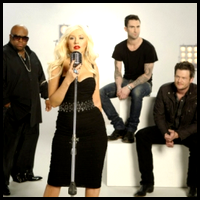
In fact, the format of a televised talent show seems to be regurgitating in recent marketability.  This April will see the debut of The Voice, yet another music competition to hit the North American broadcasts.  The show stands out with some star-studded names in its judging panel, such as Adam Levine and Christina Aguilera, along with country singer Blake Shelton, music producer Cee Lo Green, and late-night television personality Carson Daly as the host.  Later in September, Simon Cowell is back on television, and he will be introducing X-Factor to the U.S. with an astounding $5 million cash prize.  As such, if the current American Idol series leaves you unsatisfied, keep in mind there are plenty of similar alternatives within the upcoming television season.

The talent shows may be watched by many during the time of airing, but the popularity does not sustain after the competition is over.  More often than not, the winner fades into obscurity once the spotlight is taken away and the fifteen minutes of fame are gone forever.  This trend is increasingly true with the recent Idol champions, as they achieve less and less success in the music industry.  Take the latest winner, Lee DeWyze, had embarrassingly low sales for his debut album.  To put it into perspective, he was outsold by Rebecca Black of Friday notoriety!  Even less could be spoken about those who failed to win the ultimate title, other than a few rare and unusual exceptions with extraordinary circumstances.

If these talent shows do not produce a marketable and successful winner, does this not undermine the overall purpose of the competition?  And if so, why are these programs still so popular in the demand and supply markets?  This article will analyze the appeal of these televised talent competitions, and explore the aftermath of the participants after their fifteen minutes of fame are over.

What happens to the many fading stars in the boulevard of broken dreams?

Saturday, March 19, 2011

The Rebecca Black Story – A Commentary on the Pop Music Industry

The Rebecca Black Story – A Commentary on the Pop Music Industry

Rebecca Black became famous for all the wrong reasons.

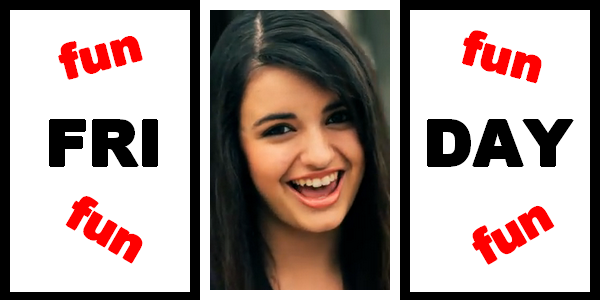
In the age of social media, where unknown artists are constantly discovered online, it is easy for anyone to post a music video on Youtube, but much harder to get noticed among the many others vying for the same ambitions. How does one distinguish themselves from all the wannabe musicians on the Internet? The thirteen-year-old Rebecca Black may have discovered an unlikely answer. This week, she became an instant online sensation after her debut music video "Friday" launched on Youtube. In the span of seven days, she achieved over 20 million views on Youtube, broke top records on Twitter, and quickly climbing the sales charts on iTunes. It is quite a feat for somebody so young and so inexperienced within the music industry.

The reason why Rebecca became popular is not because she sings extraordinarily well. In fact, being the exact opposite has propelled her to infamy across the world. She was brought to public awareness after a comedic segment on Tosh 2.0, which described it as the worst song of all time. Indeed, there are numerous elements about "Friday" that culminated to a cringe worthy experience. Whether it is the nasally voice, the banal lyrics, or the awkward dancing, the majority opinion is overwhelmingly unfavourable. Yet, like a train wreck in motion, our pop culture remained fixated with this aspiring starlet. After a while, you may become accustomed or even enjoy the catchy beat of the terrible song!

The Rolling Stone offered an intriguing perspective on Rebecca Black's recent infamy. One writer believes this song is an unintentional parody on the music industry. "Friday", which is a song that literally describes the days of the week, epitomizes the banality of pop music nowadays. Anyone can put together a commercialized music video, with little regards to the quality of the singing or the overall message. Who needs a good voice when there's auto-tune software? Who needs profound lyrics when there's a tedious yet catchy beat instead?

Rebecca Black's recent infamy reflects the increasing superficiality within the music industry, because it's all about the packaging nowadays. In fact, Rebecca's label "The Ack Factory" is an apt title to describe the prevalent issue at hand; the entire industry is indeed like a factory, churning out generic songs with little originality or depth. "Friday" might not be the worst piece of music ever in existence, but its notoriety is an indication that the pop music industry has hit rock bottom.

Sunday, March 13, 2011

You Are Fired, Charlie Sheen - Analyzing Celebrity Notoriety

Analyzing Celebrity Notoriety of Charlie Sheen

How will the fifteen million Americans survive without the uncouth presence of Charlie Sheen on their television screens?

It was the firing that took the entertainment industry and popular culture by storm.  The notorious Charlie Sheen, television's highest paying actor, was terminated from his employment at CBS/Warner Brothers after his multiple public altercations with Two and a Half Men executive producer Chuck Lorres.  Like two children slinging insults across the school playground, Sheen and Lorres used the media as a platform to express their obvious disdain towards each other, until Warner Brothers finally had enough and cut the 45-year-old actor away for good.  A scandal of this magnitude would have been the biggest public disgrace in any actor's career; but for Charlie Sheen, it was just a typical stumble among his many public wrongdoings in the past.

The story begins with our protagonist (antagonist?) Sheen checking into rehab for his drug/sex/take-your pick addition.  He is scheduled a temporary vacation from his regular taping of Two and a Half Men during the recovery.  All went well and CBS wished him the best, but the problem arose when Sheen felt patronized by his employers.  They did not truly care about his "ailment"; they are more concerned about keeping Sheen's problems under wraps so their moneymaker program will stay on the air for as long as possible.  Sheen begins to act out, demanding a salary raise to $3 million, and vocally broadcast all his dirty laundry with producer Chuck Lorres.  His unruly behaviour reached a point of unacceptability, where he was even accused of being anti-Semitic, and  so Charlie Sheen was officially fired from Two and a Half Men.

Of course, Sheen is no stranger to media notoriety in the past.  This is a man with an admitted drug (cocaine) addiction.  This is a man who also got busted in multiple prostitution scandals.  This is a man who even previously reported a murder to the police (it turns out to be a very realistic snuff film).  Charlie Sheen is already used to being in the spotlight.  He's used to being a topic of discussion in our pop culture.  Unlike other celebrities, however, he thrives on the negative publicity and becomes even more popular as the undisputed bad boy of the television industry.

His latest employment scandal should not come as a surprise to anybody familiar with his past track record.  One must wonder though if Sheen truly crossed the line this time.  By engaging in such a nasty altercation with his boss, did he sink to an irredeemable new low?  The millions of viewers who tune in to watch Charlie Sheen on Two and a Half Men may forgive his past indecencies with drugs and escorts, but will they continue to put up with his delinquent behaviour?  When does the lovable bad boy become the unlovable media scoundrel?  

How much bad press is too much?

Sunday, February 20, 2011

The Popularity of Superhero Movies - Unmasking the Superhero Icon

The Popularity of Superhero Movies


Look, it's a bird...it's a plane, no it's another superhero movie coming to a cinema near you.

Over the past decade, the American film industry has been churning out superhero movies at a rapid and frequent pace.  In between the years of 2011-2012, we can expect at least ten mainstream superhero films to hit the big silver screen.  Such titles include the latest Spiderman reboot (yes, again) as well as the much anticipated Dark Knight sequel (third in the series and counting).  Since these movies are often massively profitable and generate high market demand, it is unsurprising that filmmakers turn to these projects as a reliable investment.  They all want a slice of the market share, thus resulting in countless feature movies about a superhero of every variety.

As the mass production of superhero movies continues, this prompts an obvious question: how many superheroes do we need in our lives anyway?  It is fascinating that the same character trope has sustained throughout the years, without a drastic decline in the market demand or supply.  This essay analyzes the timeless marketability of the superhero films, and we'll also look at the hottest superhero blockbusters in the upcoming seasons - what makes these superheroes trendy?

Sunday, January 16, 2011

Motion Gaming - How Video Games Interacted with the Masses


You gotta love the Wii.

It was a three-lettered nonsensical word that revolutionized the video gaming industry. Wii was not the first platform that introduced motion gaming to the masses, but it certainly was the leader in popularizing the idea to a widespread consumer market. Since its product launch in 2006, this video gaming console has sold over 75 million copies worldwide. Fellow competitors were prompted to introduce similar motion sensing systems like the Playstation Move and XBox Kinect. Gone are the button mashing days on your clunky wired controllers. The new era of video gaming introduced a head bobbing, neck twisting, hand wringing, leg kicking, and body shaking human controller.​

The Wii implemented an innovative interactivity to the gaming experience, which is its biggest selling point by far. Previous video gaming consoles encouraged the role of the distant spectator, where you enter commands through a controller and observe the happenings on a remote screen. ​Nowadays, the focus has shifted to your role as an active participant. Since your physical movements correspond with those of the virtual character, you naturally become more involved and more engaged with the gaming experience.

For example, you swing your arm as if you are holding a tennis racquet, hitting a nonexistent ball within an imaginary court. Or you tilt your controller as if you are handling a delicate object, in an effort to master the art of balance and accuracy. This interactivity elevated the gaming experience because it makes you feel like part of the simulation. In other words, we are one step closer to immersing our physical beings into an entirely virtual dimension.​

Welcome to the new generation of video gaming.

Saturday, November 13, 2010

Glorifying Social Media - When Twitter Met Television

Glorifying Social Media - When Twitter Met Television


Welcome to the age of social media, where we are one with the Internet.

There is no denying the prominence of Facebook, Youtube, and Twitter over the past couple of years. Although these social media platforms did not exist a decade ago, they are now firmly integrated into modern society. In fact, it is incredible how much our lives are influenced by social media. We not only communicate online, but we also “tweet” and “digg” and “bookmark” and “favourite” and share all kinds of content. Any event of interest, regardless how insignificant it may be, is almost guaranteed to be reported via multiple online avenues. Whether it is a tweet or a blog post or a viral video, the buzz spreads rapidly across the Internet. After all, we are the Facebook, Youtube, and Twitter generation – we live and breathe through social media.
When Twitter Met Television
In particular, the rise of social media brought upon an interesting phenomenon within the traditional media format. Recently, the world watched its first ever situational comedy inspired by a Twitter account. Crassly titled $#*! My Dad Says, the show features William Shatner as a cantankerous old man with a wide array of snappy one-liners, while his son records these remarks on the Internet. The actual Twitter account has almost two million followers; the sitcom premiere debuted to an audience of over twelve million viewers. Let those impressive numbers sink in first, and then you better realize that it was an anonymous old man – who would never have been famous without the Internet – drew this much attention and popularity.

At first, the concept of a Twitter account sounds laughably absurd – how could an actual television show sustain based on the random tweets of less than 140 characters? As it turns out, $#*! My Dad Says is no different from the standard laugh track comedies on CBS, complete with Shatner’s distinguished way of delivering a ha-ha punch line (or any line at all, really). Yet, it is the idea behind the sitcom that displays the most originality. Think about what the show has accomplished by its mere existence: a social media icon is being celebrated in network television! Can you imagine getting a TV show based on your disjointed thoughts online? Can you imagine being famous because of your Twitter account?

While Facebook, Youtube, and Twitter grow more dominant in our culture, it is becoming increasingly clear that social media has no boundaries anymore. Its influence reaches beyond the Twitterverse or a primetime television show; it affects our modernity as a whole. This essay will analyze deeper into the seamless integration between social media and traditional media, as well as the unsettling repercussions of this recent pop culture trend.

Tuesday, October 26, 2010

Old Ladies with Spunk – A Love Letter to Betty White

Old Ladies with Spunk – A Love Letter to Betty White


Dear Betty White,

I was not part of the Facebook campaign. I was not part of the movement that pushed you to a hosting gig on Saturday Day Live. Regrettably, being part of the ignorant and self-absorbed generation, I was not aware of your presence or your legacy until recent times. I have caught glimpses of you though - you were the scene stealer in The Proposal, you starred in that Super Bowl commercial which became a viral classic, and you popped up here or there with a guest role in numerous sitcoms. Of course, this was the same Betty White who starred in The Mary Tyler Show and The Golden Girls, so the comedy genre had always been your forte.

A Love Letter to Betty White
Dare I say that 2010 is the year of Betty White? Whether you are Hot in Cleveland, or dancing dirty with Jon Hamm during the Emmy Awards, or insulting Facebook users worldwide on Saturday Night Live, it is clear that the public loves your humour, the Internet admires your spunk, and the media just can’t get enough of you. You’re writing two memoirs. You have a saucy 2011 calendar coming out. You are probably getting movie offers and television guest gigs left and right. There is even a Betty White clothing line (of hoodies), I kid you not.

At 88 years old, Betty White is not the first popular senior entertainer in the industry, but how many aging stars have been celebrated to this extent? We parade her from show to show, we laugh at her bawdy jokes, and we treasure her like she is America’s Sweetheart. The upsurge in her popularity is quite astonishing, since a celebrity past his or her prime tends to be overlooked until their sad but inevitable eulogy, followed by the in memoriam montage during awards shows. Fortunately, Betty White is still alive and kicking, and one can argue that the busy actress is still very much in her prime.

The Betty White mania does not seem to be slowing down any time soon. However, fame is fickle and fleeting; and like all popular icons, I have started to witness some backlash against Betty White. People are getting tired of her grinning mug, tired of her geriatric sex jokes, and tired of the relentlessness in promoting her across the media. In their opinion, she is overexposed, overrated, and overused. She is preferable in small doses - the one Saturday night hosting gig was a triumph for the Internet - but the naysayers are wondering when she will exit the stage and leave the limelight.

When will people get tired of Betty White?

Sunday, September 19, 2010

Explaining the Bieber Fever – Who is Justin Bieber?

Explaining the Bieber Fever - Who is Justin Bieber?


Seriously, what is the deal with Justin Bieber?

The sixteen-year-old is technically a singer, but he is better known as an unstoppable online icon and prodigious teenage sensation.  Recent Twitter studies have shown that 3% of the microblogging servers are dedicated to him, and his name is mentioned 60 times per second during peak hours.  To put this statistic in perspective, co-founder Evan Williams reported that Twitter averages 90 million tweets per day, which means there are approximately 2.7 million mentions of Justin Bieber on any given day.  In simpler terms, it appears as if Bieber’s online fandom has the influence and prevalence measurable to a small country. 

Who is Justin Bieber?
How could a single person, let alone a harmless and inoffensive teenager from a small town in Canada, warrant so much attention?  What could possibly be so fascinating about Justin Bieber?  Although his two albums (titled My World and My World 2.0) skyrocketed in sales, he hardly lit up the music industry with any interesting or innovative songs.  And with all due respect to teenagers, his life experiences at the age of sixteen are virtually non-existent.

Despite his lack of accomplishments, the Internet’s ongoing conversation about Justin Bieber is growing more prominent each day.  The discussions often revolve around his helmet hair, his eight-year-old girl voice, or his tendency to attract water bottles hurling at him on stage.  Nobody said he was an interesting guy, but the Internet sure has taken an unhealthy interest to him.  In any case, the mundaneness of Justin Bieber has not stopped his popularity one bit.  While his celebrity status may seem very fortunate, I do not believe his success is entirely accidental.  In an attempt to rationalize the ‘Bieber fever’, this article will analyze the numerous factors that contributed to his massive appeal.

Tuesday, August 24, 2010

Into the Third Dimension – The Appeal of 3-D Entertainment

The Appeal of 3-D Entertainment


Remember a time when 3-D movies did not used to be popular?

For the past few decades, various forms of three-dimensional entertainment have only appealed to a selective niche market.  They were mostly contained within amusement parks, targeted towards children and their parents during the typical family summer vacation.  These 3-D movies never hit it off in mainstream culture, because wearing those clunky glasses to the cinema did not feel comfortable, convenient, or economically viable.  Besides, the enjoyment derived from an additional dimension was not substantial enough for businesses or consumers to invest in this media.

In the age where many naysayers predicted the demise of television and movie entertainment, few people expected there would be a sudden upsurge in 3-D films during the recent years.  Not only did they reach out to the younger demographic, but many adult moviegoers are also fascinated by the unique viewing experience.  These consumers were even willing to shell out extra money in the cinema for the three-dimensional alternative.  As evident by the unprecedented number of 3-D movie releases in the upcoming year, this form of entertainment has been surprisingly revived.  The real question remains: how long will this modern phenomenon sustain?

Sunday, July 18, 2010

Vampires - A Modern Phenomenon with the Supernatural


There are vampires among us.

    What should have been a daunting statement now seems rather trivial, due to the overexposure of these mythical creatures in our modern society.  Vampires exist not only in our literature, but also in our television shows, our cinema screens, and of course our Halloween parties.  Lately, there seems to be no escape from these fanged monsters, not even in broad daylight.  There are swarms of enthusiasts lined up outside of the bookstores and theatres, eagerly anticipating for the next instalment of their vampire franchise.

    Vampires are not a recent phenomenon.  These creatures of the un-dead have haunted our popular culture for centuries.  From Bram Stoker’s classic gothic novel Dracula to Stephenie Meyer’s teenage romantic saga Twilight, vampires carry a prominent influence in many works of fiction.  In fact, their creative potential seems endless.  Rather than going out of style, these timeless characters grew stronger in mystique and intrigue.  Former hit television shows like Buffy the Vampire Slayer and Angel introduced us to multi-faceted vampires that fall in between both ends of the moral spectrum.  Recent cult favourites like True Blood and The Vampire Diaries further demonstrated the complexities of the supernatural community.  Evidently, the momentum for this storytelling niche does not appear to be slowing down any time soon.

Tuesday, June 15, 2010

Love in Reality Television – Celebrating Adultery and False Romances


Romance is dead in reality television.

    After twenty collective seasons of The Bachelor and The Bachelorette, one must wonder if any actual romance existed in the first place.  There is definitely lust among the contestants, as evident by the multitude of make out sessions per episode, but can meaningful relationships blossom beyond the initial physical attraction?  The track record seems doubtful.  This series has produced just one happily married couple so far.  Perhaps two couples, if we take into account of the notorious bait and switch scandal.  Nonetheless, there have been at least eighteen failed relationships, which is an astonishingly high number for a franchise that promises to discover true love.

    The truth about romance in reality television is that it rarely occurs.  In normal life, most couples take months and years before finally connecting with one another.  In reality television, this dating process is reduced to a matter of weeks, with the threat of a prospective engagement at the end of the journey.  Time issues aside, many reality television couples suffer from the delusions of amour, due to the manufactured circumstances in their artificial setting.  Sure, it is easy to fall in love during a romantic candlelit dinner at a gorgeous exotic locale, but will the feelings remain the same in a less glamorous environment?  The biggest drawback to The Bachelor franchise is that it does not prepare couples for a practical relationship outside of the show’s bubble, without the camera crew and without the luxury dates.

Monday, May 10, 2010

The Lady Gaga Phenomenon – Attention Please!


Lady Gaga sure loves the media attention.

    Several years ago, the phenomenon that is Gaga barely registered on anybody’s radar.  She was an unknown entity in the music industry, performing at small public arenas with little recognition.  It took nearly three years of struggle before her first album The Fame was released.  True to the title, this marked the beginning of Lady Gaga’s stardom.  The singer, still in her fresh twenties, quickly rose as a prominent leader in pop and dance music.  She also became an iconic figure in fashion and accessories, for better or for worse.  Unlike most one-hit wonders, Gaga followed up with an equally strong sophomore album called The Fame Monster, thus solidifying her status as a widely successful artist in the 21st Century.

    Lady Gaga not only received attention in radio airplays, but she also attracted both good and bad publicity across the different media platforms.  In particular, online blogs love documenting her every move.  It helps that she has a magnetic presence, especially in the wardrobe department.  Her wacky costumes have been the central topic of many pop culture discussions, and the creative inspirations for Halloween parties.  In fact, Gaga is so defined by her unique fashion sense that her name became synonymous with crazy clothing and a crazier persona.  This type of attention is either a celebrity’s best accomplishment or their worst nightmare – her identity as an artist is dictated by her outward appearance.